
Viral infections (Virosis) evolve in several phases (incubation, onset period, status phase, finally followed by convalescence or chronicity).
Incubation represents the period from the infecting contact until symptoms occur and varies as extremely long from one flu to another (e.g. 1-2 days for influenza virus and 2-6 months for hepatic B virus).
In the onset period the symptoms are similar in all Virosis („flu-like”-as in the flu: fatigue, subfever, nausea, vomiting, largely due to the secretion of interferon).
The status phase is associated with multiplication in the target organ, and appear „organ” symptoms.
Convalescence is the inactivation of the virus by removing it from the body by the immune system of the infected person.
Chronic is associated with viral persistence (the virus cannot be removed from the body by the immune system).
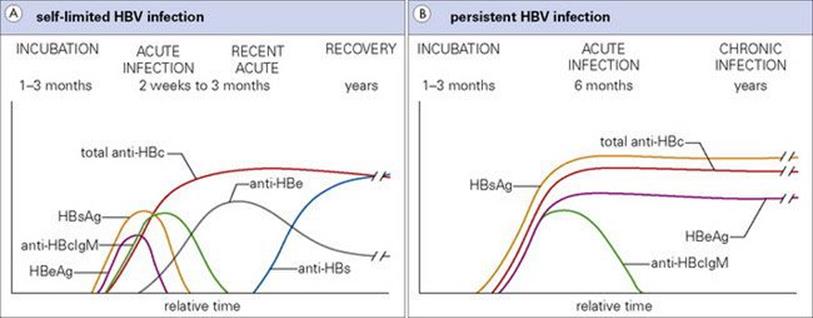
In the figure you can see the evolution of one of the infections that may affect unvaccinated pregnant women – hepatitis B.


About Corneliu Zaharia
